Please ensure Javascript is enabled for purposes of website accessibility

Category: Headaches

  • Three physical therapy treatments to help relieve tension headaches

    Three physical therapy treatments to help relieve tension headaches

    An occasional headache is a normal part of life, but long-lasting and frequently recurring headaches are signs of an issue that needs to be addressed. Living with a headache every day is no way to live. Fortunately, there are treatments that can help.

    Treatments for tension headaches vary depending on the cause and severity of the headache. However, in many cases, physical therapy can help.

    Understanding tension headaches

    A tension headache is the most common primary headache disorder in the world. Typically, a tension headache is related to stress or associated with musculoskeletal problems in the neck. 

    Tension headaches are frequently described as a feeling of pressure or tightness, often like a band around the head that spreads into or from the neck. Such headaches can be caused by stress, fatigue, poor posture, and neck or jaw injuries.

    Treating tension headaches with physical therapy

    Often, physical therapy treatments will focus on three areas: improved posture, improved strength in the upper back, neck and shoulders, and improved mobility in the neck and spine. Physical therapists have a variety of techniques they use to reach these goals, including:

    • Stretching and exercising — Stronger and more flexible muscles in the neck and upper back help to support your spine and head. This helps reduce pressure off the nerves in your spine, which is a cause of tension headaches.
    • Posture guidance — Poor posture puts additional strain on the spine that can be prevented by simply improving the way you sit, stand and sleep. Your physical therapist can examine your sitting, standing and sleeping posture to identify areas that need improvement. They can guide you through ways to make these improvements to help keep headaches at bay.
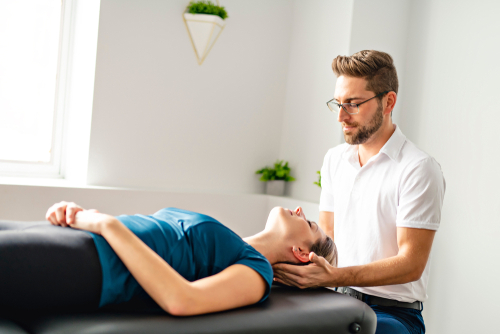
    • Manual therapy — Physical therapists can use manual therapy (which is a series of hands-on techniques) to help work out tension and scar tissue in your neck muscles, tendons and ligaments. 

    Visit SOL today for tension headache treatment

    Do you suffer from frequent or intense tension headaches? Our team at SOL can help. We can provide a personalized treatment routine to help you reach your recovery goals and live a life with less head pain. Contact our team today for more information about treating tension headaches or to schedule an initial appointment.


  • What do headaches mean and how can I treat them?

    The pounding in your head. Having trouble focusing on your work. Stiffness in your neck. All these symptoms are typical when you have a headache. 

    It’s not even all that unlikely that you’ve experienced them. Medical research indicates that about 50% of people experience at least one headache a year. Understanding what your headaches mean can go a long way toward treating them and even helping you avoid them. Our physical therapists can help you develop such an understanding of your headaches. 

    Your headaches could mean that you’re dealing with one of these factors

    Pinpointing the cause of any medical condition is a key factor in treating it, and this includes the treatment of headaches. There are many factors that can cause you to develop a headache, and our physical therapists can help reveal the specific causes of your headaches. 

    Some of the things your headache could mean are that you’re: 

    • Stressed out — Stress tends to reduce blood flow and cause tension in the muscles. These factors can affect the neck and head muscles and trigger a headache. 
    • Dehydrated — Staying properly hydrated is important for many reasons. One of them is that dehydration can be a source of headaches. 
    • Sitting with poor posture — Poor head and neck posture is common. One medical study reveals that almost 64% of university students have forward head posture. This form of poor posture places increased strain on neck muscles, which can trigger headaches. 

    Other factors that could be behind your headaches include: 

    • Neck injuries
    • Jaw joint issues
    • Lack of sleep
    • Dietary issues
    • Concussion
    • Sinus infections
    • Ear infections

    Armor Physical Therapy can help you figure out what your headaches mean

    Want to find out what your headaches mean? Turn to our Armor Physical Therapy team. We can perform a free screening for you, and this screening can help pinpoint the specific cause(s) of your headaches. Our team also excels at building therapy plans designed to treat headache symptoms. We can even help you learn how to prevent future headaches. 

    Things keeping you at home? Our team is currently offering virtual care and at-home therapy services. In addition, you won’t have to leave home to get a doctor’s referral because we don’t require one for any of our services. 

    Ready to start getting our help with your headaches? Contact us today for more information about how we can help or to schedule your initial appointment. 

  • What to do when you’re suffering from constant headaches every day

    What to do when you’re suffering from constant headaches every day

    Pain all over your head. Pain behind your eyes. Pain in your neck and shoulders. All these types of pain are ones you’ve likely experienced if you’ve ever had a headache. 

    The likelihood of you NOT having a headache is actually fairly low because it’s estimated that more than 90% of people have at least one in their lifetime. However, most people only have headaches occasionally. Unfortunately, there are some people who suffer from constant headaches every day, but these people may be able to reduce their headache frequency by using four specific tips. 

    These three tips can help people suffering from constant headaches every day

    Physical therapists can help people find ways to treat constant headaches every day. Some of the tips that a therapist might recommend for such patients include: 

    1. Holding your head up — Forward head posture is a greater problem than most people realize. In fact, every inch you tilt your head forward adds an extra 10 pounds of weight that your neck must hold. Over time, this increased stress can lead to chronic headaches. Unfortunately, many people have forward head posture. One study reports that almost 86% of the people surveyed had this type of poor posture. 
    1. Taking less pain medication — Many people turn to over-the-counter or prescription painkillers when they have a headache. However, taking pain medications too often can actually lead to a type of headache called rebound headaches. It’s estimated that rebound headaches occur in up to 2% of Americans, which equates to more than 6.5 million people. Your chances of developing such headaches is significantly higher if you take pain medications more than two days per week.
    1. Attending physical therapy — You might not be surprised that a physical therapist would recommend physical therapy for treating headaches. However, research shows that it can be very helpful. One study reports that just three weeks of therapy helped more than 57% of patients decrease their level of headache pain. 

    SOL Physical Therapy can help you find ways to treat constant headaches every day

    Suffering from constant headaches every day? Our team at SOL Physical Therapy is ready to help you find treatment options intended to reduce your pain and headache frequency. We’ll start by doing an initial screening. Using the information we gather, our therapists will then construct a personalized therapy plan designed to decrease headache frequency and reduce your pain if you do have a headache. 

    You can also use our virtual care services to get help for your headaches without leaving your home. In addition, you can use any of our therapy services without first getting a doctor’s referral. 

    Ready to start getting our help with your headaches? Contact our team today for more information about our treatment options or to schedule an initial appointment. 

  • What you need to know about neck pain and headaches from stress

    What you need to know about neck pain and headaches from stress

    Stress is nothing more than our reaction to something that upsets our physical and/or mental equilibrium. Therefore, stress is an inevitable part of life. 

    Nevertheless, when we are faced with stress, our “fight or flight” response can be triggered; this causes the production of hormones including adrenaline and cortisol to increase and rush through your body. One common effect that these stress reactions can have is to cause neck pain and headaches. In fact, research shows that headaches are one of the top 10 most disabling conditions for Americans. 

    How does stress cause neck pain and headaches? 

    Besides the stress reactions mentioned above, stress can also lead to neck pain and headaches. Stress can cause muscles in our neck and scalp to contract. These muscle contractions can also occur when we’re faced with anxiety or depression. When these muscles contract, they often cause dull, nagging headaches that often turn into full-blown migraines.

    Robert Gotlin, director of Orthopaedics and Sports Rehabilitation at Beth Israel Medical Center, says this about neck pain: “As stress goes up I definitely see more patients with neck pain. Every year around tax time, the number of patients with neck pain increases, especially among Wall Street types here in New York.”

    What other issues can cause neck pain besides stress? 

    Another cause of neck pain and headaches is structural and results from a neck joint issue. This type of headache is known as a cervicogenic, or neck-based, headache. Research shows that fixing the neck issue can also end the headache. The joints usually associated with a cervicogenic headache are:

    • Atlanto-occipital joint (O-C1)
    • Atlanto-axial joint (C1/2)
    • C2 cervical joint
    • C3 cervical joint

    Some other common causes of headaches besides stress include:

    • Caffeine (too little or too much)
    • Sinus infections from a cold or the flu
    • Alcohol consumption
    • Eye strain
    • Fatigue
    • Tobacco use
    • Poor head and neck posture

    How can I deal with stress-based neck pain and tension headaches?

    Tension headaches are the most common of all headaches, and this means you need to know how to deal with one. Here are three tips on how to deal with tension headaches:

    1. Relax — Tension headaches are called this for a reason; relaxation and stress relief can help alleviate your headache. Also, activities that strain your neck and back should be curtailed.
    1. Fix your workplace ergonomics — A headset for your telephone. Proper monitor positioning. A desktop riser that lets you work while standing. Each of these options can help you address poor workplace ergonomics that might be causing your headaches.
    1. Stretch your neck muscles — Stretching is a great way to reduce tension in neck muscles. Try stretching with a general exercise program designed by a trainer or physical therapist and that’s specific to your needs.

    Find out how Rehab Access can help with your stress-based neck pain and headaches

    Need help dealing with chronic neck pain and headaches caused by stress and other issues? Our team at Rehab Access is primed to help headache sufferers get physical therapy that can reduce their symptoms and headache frequency. 

    We’ll start by performing a complimentary screening on you. This will give our specialists the chance to learn the source of your neck pain and headaches. Next, our team will construct a personalized therapy plan for you that may include therapy techniques like virtual care. You can even start using our therapy services without going through the hassle of getting a doctor’s referral first. 

    Contact our team today for more information about our neck pain and headache treatment options or to schedule an initial appointment.

  • Five conditions that cause chronic headaches and neck pain

    Five conditions that cause chronic headaches and neck pain

    An occasional minor headache is usually no cause for alarm, but chronic headaches and neck pain can cause you to miss out on the important things in life, like quality time with your family. 

    Neck pain and headaches are often connected because of conditions in your neck that spread pain into your head. These are known as cervicogenic headaches. 

    Take a moment to get to know what might be causing your cervicogenic headaches and why you may need physical therapy for treatment. 

    Five possible reasons you have chronic headaches and neck pain

    1. Strains — Overstretched or torn muscles in the neck are referred to as strains. A strain is painful and limits the range of motion in your neck. This increases stress on your spine, which puts pressure on the nerves running through it into your skull.
    2. Whiplash — Whiplash is an injury that occurs when your head suddenly jerks forward and back, such as when in an automobile accident. This motion can strain your neck and cause herniated discs and other spine issues that contribute to neck pain and headaches.
    3. Herniated disc — A herniated disc is a disc in your spine that has burst, which causes its fluid to leak out and spread around the spinal cord. The pressure from this fluid surrounding your spinal cord can cause pain to your nerves that run from your neck into your head.
    4. Degenerative disc disease (DDD) — DDD is the natural wear and tear on the discs in your spine that develops as you age. Some people never notice any effects from DDD, but others may have pain and stiffness. If DDD affects the discs in your neck, you may develop pain that spreads into your head.
    5. Arthritis — Arthritis causes inflammation that destroys the cartilage in your joints. This can affect the joints in your spine, which can cause pain in the neck that spreads to your head. 

    Visit Excel Sports & Physical Therapy for chronic headache and neck pain treatment

    Do you have constant headache and neck pain that may be related to one of these conditions or another chronic condition? Our physical therapists at Excel can help. We can thoroughly examine your neck to determine the source of your pain. We will develop a personalized treatment routine to help you reduce your pain and improve the range of motion in your neck. 

    Physical therapy treatments for headaches and neck pain typically include:

    • Gentle exercises and stretches
    • Posture guidance
    • Hands-on mobilization techniques
    • Patient education and more

    Are you ready to start your recovery journey from headaches and neck pain? Contact our team today for more information about chronic headaches and neck pain or to schedule an initial appointment.

  • Five tips for managing chronic headaches without medication

    Five tips for managing chronic headaches without medication

    Most people are familiar with occasional headaches. They can be disrupting for a little while, but usually, they go away after a little time and rest. However, if you’re one of the many who suffer from long-lasting or frequently recurring headaches, you may be looking for a solution that can help.

    Treatments for chronic headaches vary from person to person depending on the cause and severity of the headache. However, there are some general tips for managing chronic headaches that everyone should follow to help keep headaches at bay. 

    Five tips for managing chronic headaches

    1. Ease the pressure off your head — You may be putting pressure on your head in ways that you don’t realize. Wearing a hat that fits too snugly or pulling your hair back in a tight ponytail can put pressure on your head that increases your frequency of headaches.
    2. Drink more water — Many headaches are the result of dehydration. Simply drinking more water throughout the day can help reduce and prevent headaches.
    3. Quit smoking — Smoking inhibits your blood flow and limits the amount of nutrients and oxygen that your brain needs for daily function. With less of an intake of nutrients and oxygen, you may experience more frequent headaches.
    4. Stretch every day — Tension in your neck muscles frequently leads to headaches. When the neck muscles are tense, pressure increases on your spine, which causes pain in the nerves that spreads into your head. Stretching your neck muscles every day can help reduce and prevent pain related to tension.
    5. Improve your posture — Poor posture can strain your neck muscles, adding to the tension and pressure in your neck that can contribute to headaches. Make sure you sit and stand with your head straight and your ears squared with your shoulders. When sleeping, make sure you have enough support under your head to keep your spine in alignment. 

    Visit Franklin Rehabilitation for chronic headache treatment

    Despite your best efforts, you may still deal with chronic headaches that make your daily life much more challenging. In these circumstances, physical therapists can help. At Franklin Rehabilitation, our physical therapists can examine your condition to pinpoint the source of your pain and work on a treatment that will help.

    The treatments we provide are always personalized to your needs. They are designed to help reduce and prevent headaches by empowering your body’s own natural abilities rather than relying on medications or invasive procedures. Physical therapy treatments often include:

    • Therapeutic exercises and stretches
    • Joint and soft tissue mobilization
    • Posture guidance
    • Patient education and more

    Contact our team today for more information about chronic headaches or to schedule an initial appointment.

  • Two treatment exercises for cervicogenic headache pain

    It’s rare that a person has never had at least one headache in their lifetime. Avoiding headaches isn’t easy. Headaches tend to be triggered by tightness in the neck and shoulder muscles, but most people only experience them once in a while.

    However, some people might have frequent headaches that radiate from the neck into the side or front of the head. If you’re having them at least 15 days per month, you fall into a category of patients who have cervicogenic headaches. Physical therapy can be an effective treatment for the source of your cervicogenic headaches. People with headaches that are triggered by cervical disc pain can particularly benefit from two therapeutic exercises. 

    1. Chin tucks

    Treatment exercises for cervicogenic headache pain will often focus on the suboccipital muscles. These four muscle groups connect the top of your cervical spine to the base of your skull. Constantly looking down at a cellphone or laptop can cause them to tighten up, and this tightness can generate a cervicogenic headache. There are several therapeutic exercises that your therapist might recommend to stretch the suboccipital muscles. One such exercise is the chin tuck. 

    Steps for performing the chin tuck stretch

    • Sit or stand with your eyes facing forward and your ears centered over your shoulders.
    • Place one finger on your chin. 
    • Leave your finger where it is, and slowly pull your chin and head straight back until you feel a stretch at the top of your neck. Slight overpressure can be applied with the fingers if needed.
    • Hold the stretch for three seconds.
    • Slowly bring your head forward back to the starting position, avoiding (protracting) jutting your head forward. 
    • Rest your neck for a few seconds; then repeat these steps again until you’ve done the movement ten times.
    1. Side head tilts

    Therapeutic exercises for cervicogenic headache pain treatment may also focus on the upper trapezius muscle. This muscle runs from the middle back to the shoulder blade, and it also runs from your shoulder blade to the base of your skull. One exercise that your therapist might recommend to stretch the upper trapezius is the side (lateral) head tilt. 

    Steps for performing the side head tilt 

    • Sit in a stable chair with good posture. Make sure your head is centered over your shoulders. 
    • Grip the bottom of the chair with your right hand and slowly tilt your head to the left. This should cause you to feel a stretch in the right side of your neck. Be sure to keep your eyes looking forward and not allow your head to rotate toward the floor.
    • Hold this stretch for 30 seconds. 
    • Return your head to the starting position. 
    • Grip the bottom of the chair with your left hand now; slowly tilt your head to the right to stretch the left side of your neck. 
    • Hold this stretch for 30 seconds. 
    • Continue to repeat these steps until you’ve stretched both sides of your neck three times. 

    Effective treatment for cervicogenic headache pain can be found at Armor Physical Therapy

    Do you want the best treatment for your cervicogenic headache pain? Our team at Armor Physical Therapy is ready to assist you. We offer free screenings that are designed to pinpoint the source of your headaches. Once the source is identified, our team of physical therapists can build you a personalized treatment plan, which may include therapy methods like: 

    Take the next step to start getting our help with your chronic cervicogenic headache pain. Contact us today for more information or to schedule a free screening. 

  • What to do when dealing with frequent headaches from neck pain

    What to do when dealing with frequent headaches from neck pain

    Headaches related to neck pain, also known as cervicogenic headaches, affect millions of people each year. Although not as common as other types of headaches such as migraines and tension headaches, headaches from neck pain can have a devastating impact on quality of life for the people they affect. Dealing with headaches and neck pain separately can be difficult enough, but both together can be seriously debilitating. 

    There are a wide range of treatment options for these types of headaches, including physical therapy. By taking a natural approach to relief that seeks to address the root causes of neck pain and cervicogenic headaches, a physical therapist can help you achieve lasting relief and function without being overly reliant on medication and other forms of treatment. 

    Goals of physical therapy for headaches from neck pain

    To help you achieve your treatment goals, a physical therapist will start by working to identify the causes of both your neck pain and headaches. Even if a spine condition such as arthritis or a herniated disc is the primary cause, other factors such as posture and weak supporting muscles can play a role in the development of headaches. 

    By coming up with a treatment plan, you can work to achieve the following goals: 

    • Strengthen the neck to relieve pressure on compressed nerves
    • Fix mechanical and postural problems that are associated with headaches
    • Increase range of motion in the neck 
    • Relax and release tense and painful muscles in the neck and head

    Treatment programs vary, but typical methods include therapeutic exercise, manual therapy and other options like electrical stimulation. To give yourself the best chance of finding relief, it’s important to find a licensed and experienced therapist whom you can build a productive relationship with.

    Headache and neck pain relief at Rehab Access

    When you come to one of our state-of-the-art clinics in Belle Chasse and Gretna, Louisiana, you can expect to receive compassionate, one-on-one care from clinicians who will work to understand your needs and help you achieve your goals. Take the first step in your treatment journey by contacting us today and scheduling your initial appointment. Headaches and neck pain don’t need to negatively affect your relationships, work and hobbies.

  • The basics about tension headaches in the back of the head

    The basics about tension headaches in the back of the head

    An article published by the World Health Organization (WHO) in 2016 shows how common headaches are. This article reports that about half of the global adult population had a headache in 2016, and it’s not likely that this statistic has changed much. One way you can deal with the tension headaches that start at the back of your head more effectively is to know more about them. Here is some basic information that can help you better understand these headaches: 

    What is a tension headache?

    Tension headaches that begin in the back of the head are a type of headache where you may feel dull pain, tightness and pressure. Often, these symptoms are not just felt in your head. They can also appear in your neck, shoulders and jaw. In many cases, tension headaches only occur once in a while, but they can develop into a long-term issue depending on what’s causing them. 

    What causes tension headaches?

    There are several factors that can cause tightness in the back of the head that leads to a tension headache. The biggest factor that causes this type of headache is typically stress. When you get stressed, you tend to tense muscles in your neck called the suboccipital muscles; these muscles are located at the back of the head where it meets the neck. Tension in these muscles can be the source of your tension headache.

    Another factor that can lead to tension headaches is poor head and neck posture. A head-forward posture often happens to people when they spend long hours on the computer or looking down at their cellphone. This posture places more strain on the neck muscles. The additional strain can lead to muscle pain and tension, and these symptoms can make tension headaches more likely. 

    How do tension headaches make you feel?

    As mentioned above, tension headaches that start in the back of the head typically cause pain, tightness and pressure. People often report that this type of headache feels like a band around the head, and tension headaches often tend to occur later in the day. However, these symptoms aren’t the only ones you might have to deal with. 

    Another symptom often caused by tension headaches is a mild sensitivity to light or sound. Many people with this form of headache can also feel fatigued, but they may have increased trouble falling or staying asleep. It’s also common for tension headache sufferers to be more irritable than usual. 

    What is an effective treatment option for tension headaches?

    There are many options that can help treat a tension headache that starts in the back of the head, but physical therapy is one option that can both treat and prevent these headaches. 

    One place you can find physical therapy for your tension headaches is Armor Physical Therapy. Our team offers free screenings, and this service can help pinpoint the root cause of your headaches. With this information, our therapy specialists can design a therapy plan for you that can treat your current headache, and this plan may also be useful at preventing future headaches. Your personalized therapy plan will include multiple beneficial therapy techniques, such as the following: 

    Don’t wait to begin getting our help for your tension headaches. Contact us today for more information or to schedule an initial appointment.

  • Why you may need to see a physical therapist in Harmony, PA, for migraine treatment

    Why you may need to see a physical therapist in Harmony, PA, for migraine treatment

    Migraine pain is often intense and can cause you to basically shut down until the migraine passes. Migraines can be triggered by several factors like bright lights, smells or loud noises. For many, migraines are also connected to pain and tension in the neck.

    If you suffer from intense and frequent migraines, physical therapy may be able to help. Physical therapists can address tension and pain in the neck to help reduce the severity and frequency of your migraines. Below are some of the ways physical therapy can help with migraines:

    Exercising and stretching helps improve strength and flexibility

    One of the primary ways physical therapists address pain and stiffness in the neck is with exercising and stretching. Physical therapists can guide you through gentle exercises and stretches designed to help improve the strength and flexibility of the muscles, ligaments and tendons in your neck.

    When these muscles and soft tissue are more flexible, they provide better support for the spine and head, which can reduce pressure that leads to migraines. 

    Manual therapy helps reduce tension and improve range of motion

    Physical therapists may use hands-on techniques known as manual therapy to help with neck pain and migraines. These techniques involve positioning your soft tissue and the joints in your neck in ways that help reduce tension and improve range of motion. 

    Manual therapy also helps to break down scar tissue that may have developed from an injury or surgery.

    Posture guidance can help prevent future tension

    The muscles and tendons in your neck can become strained if you constantly hang your head forward when reading, using your cellphone or typing at a computer. Physical therapists can help you correct your posture for these activities to help reduce the buildup of strain and tension that leads to neck pain and migraines. 

    Visit Panther Physical Therapy in Harmony, PA, for migraine treatment

    Are you tired of migraines making your daily life much more difficult? Our team at Panther Physical Therapy in Harmony, Pennsylvania, is ready to help you recover. Contact our team today for more information about migraines or to schedule an initial appointment. 

  • Neck pain at the base of the skull: Two issues it can cause

    Neck pain at the base of the skull: Two issues it can cause

    Having neck pain at the base of your skull might seem bad enough, but the causes of this pain can lead to other painful issues, too. Pain in this area is often caused by overly tight suboccipital muscles, which are located at the base of the skull. The pain could also be related to pinching or irritation of the occipital nerves. These nerves run up from the top two neck vertebrae, and they run up into the scalp. Either of these causes of neck pain could lead to other issues. 

    1. Tension headaches

    Neck pain at the base of the skull can also morph into a tension headache. This is especially likely if your suboccipital muscles are too tense, and tension in these muscles is common in people who spend lots of time working on a computer or mobile device. From the initial pain in the neck, tension headaches can cause a feeling of tightness in the back, sides and front of the head. These headaches often last for hours. In many cases, finding ways to reduce the tension in the suboccipital muscles can help treat a tension headache. These treatments might include therapeutic stretching exercises or other types of physical therapy. 

    1. Migraines

    Migraines are another problem that can stem from neck pain at the base of the skull. The pain this issue leads to is typically stronger than that of a tension headache. In addition, migraines can cause several symptoms that tension headaches don’t. An example of one of these symptoms is nausea, and people with migraines can also experience blurred vision or sensitivity to light. It’s also common for migraine symptoms to get worse when you move around. As a result, physical therapy for this issue may have to wait until your symptoms subside. 

    Find help with neck pain at the base of the skull at Peak Performance

    Peak Performance has six physical therapy clinics located in North Carolina, and we want to help you find out why there’s pain at the base of your skull. Pinpointing the cause of your pain can be done by coming in for a free screening. After we figure out the source of your pain, we’ll build you an individualized therapy plan to treat it. Our plans include multiple therapy techniques, and therapy techniques that could be included in your plan are: 

    Contact us today for more information or to schedule an initial appointment to begin treating your neck pain. 

  • Two muscle groups that cause headaches on top of the head

    Two muscle groups that cause headaches on top of the head

    The World Health Organization (WHO) conducted a study that showed about half of adults have had a headache in the past year. One type of headache you may have experienced is a headache on top of your head, which are also called skullcap headaches. These headaches are a form of tension headache, and they can be caused by many factors. There are two muscle groups in your neck that can cause skullcap headaches. 

    1.   Suboccipital muscles

    The suboccipital muscles are a group of four muscles in your neck. They connect the top two vertebrae of the spine to the bottom of the skull. These muscles are responsible for turning your head to one side or the other, such as when you look over your shoulder. They also allow the head to be tilted to the side, and this allows you to do things like touch your ear to your shoulder. 

    Tension in these muscles can lead to a headache on top of your head, and this tension can build up in several ways. For instance, people who perform repetitive head movements are at risk of this form of tension. Also, holding a phone against your shoulder for long periods of time can lead to tension in the suboccipital muscles. This means that workers who talk on the phone a lot while typing, such as administrative assistants, should be careful with how much they use this posture. 

    2.   Splenius muscles

    The splenius muscles are a second group of neck muscles that can cause headaches on top of the head. There are four muscles in this group. This includes two splenius cervicis muscles and two splenius capitis muscles. 

    These four muscles run up the sides of the neck from between the shoulder blades to just below the skull. They are responsible for several types of movement, including extending the neck when looking down and twisting the neck. These muscles also help support the neck and the weight of the head. 

    There are several factors that can lead to increased splenius muscle tension and skullcap headaches. For instance, the muscles may be injured in a car accident or from collisions while playing sports. Consistently poor neck posture can also increase the tension in these muscles, and this is becoming more and more common thanks to handheld devices. 

    Rehab Access can help you find relief for headaches on top of the head

    The residents in and around Belle Chasse and Gretna, Louisiana, can count on Rehab Access for help with skullcap headaches. Our experienced team of physical therapists can create a personalized treatment plan for these tension headaches. Your plan may include many therapy techniques, such as: 

    Take the next step to reduce the frequency of your headaches. Contact our team today for more information or to schedule an appointment. 

When Was Your Appointment?

We recently changed bill pay providers. Please click the button for the date of your appointment to be directed to the correct online payment portal.